
How Do Analyst Upgrades Affect Stocks?
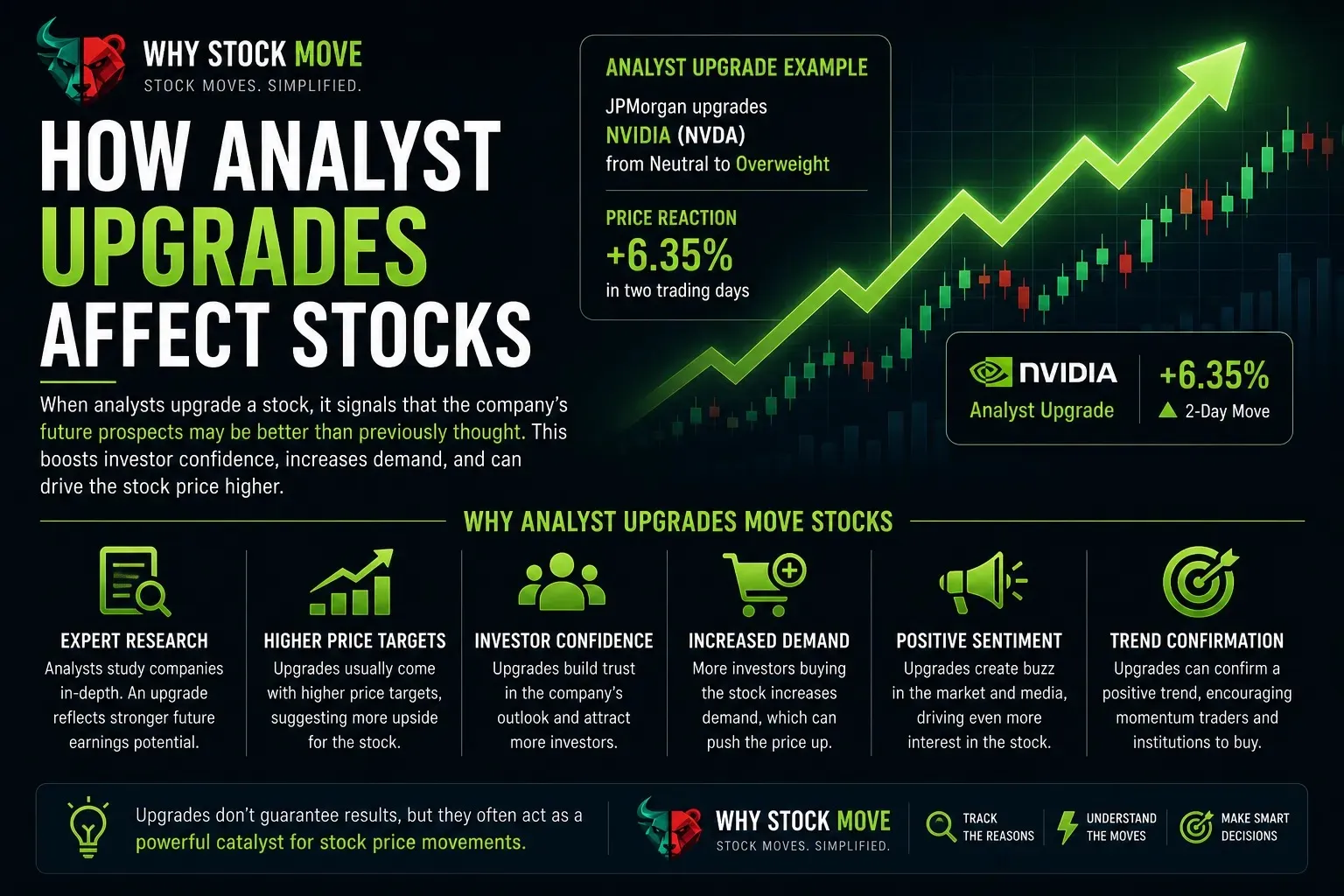
An analyst upgrade does not move a stock because one person said “buy” on television. It moves the stock when that upgrade changes who is willing to own the name, how earnings models get framed, and how much career risk portfolio managers feel in staying underweight. Some upgrades are noise. Some are the market’s permission slip to reprice a stock higher.
What Analyst Ratings Actually Mean
Analyst ratings are shorthand for a broader view on earnings power, valuation, and expected relative performance. The label matters less than the assumptions behind it. A stock usually reacts when the upgrade comes with higher numbers, stronger channel checks, or a thesis that resolves a debate the market cared about. Without that deeper change, the rating alone fades quickly.
Example: When firms raced to revise Nvidia higher after its May results, the important part was not the word “overweight.” It was the fact that analysts were dramatically increasing their revenue and profit forecasts.
What to watch for: Watch the estimate change behind the rating. If the numbers barely move, the call is mostly optics.
Institutional Buying Often Follows an Upgrade
Upgrades matter because many large investors rely on analyst coverage as part of their workflow, even if they do their own research. A fresh bullish call can put a stock back on the agenda, trigger conversations with sales desks, and reduce the career risk of buying a controversial name. That process creates real demand when the thesis is changing at the same time.
Example: Meta’s rebound in early was helped by research firms turning more constructive as the cost story improved, which encouraged institutions to revisit a stock they had abandoned in .
What to watch for: Watch volume and follow-through over several days. True institutional response rarely ends with the opening gap.
Price Target Hikes Change the Reference Point
A higher price target can act like a new anchor for investors who were uncertain about upside. It does not create value by itself, but it can shift the conversation from “is this stock broken?” to “how under-owned is this still?” That matters especially after a big catalyst when buy-side investors are trying to decide whether the first move already captured the story.
Example: After Nvidia’s May earnings, repeated target hikes helped keep the upside framework moving higher as investors realized prior assumptions had been too conservative.
What to watch for: Watch whether the target hike comes from higher earnings estimates or from simply slapping a bigger multiple on the same model. The first is more credible.
Initiations of Coverage Can Create a First Wave of Demand
Coverage initiations matter most in stocks that were underfollowed before the note arrived. The report introduces the business to new buyers, provides a model template, and can widen the shareholder base if the thesis is compelling. In smaller-cap names, that attention effect alone can move the price meaningfully because the starting base of informed ownership was thin.
Example: After Arm returned to public markets in , fresh coverage from major banks contributed to sharp moves as institutions worked through a new semiconductor story with limited initial trading history.
What to watch for: Watch whether the initiation comes from a top broker with strong sector reach. Distribution matters as much as the rating in new coverage.
Downgrades Can Pressure a Stock for Days
Downgrades hurt when they confirm what investors were starting to fear. They are especially damaging after a thesis break because each new cut reinforces the idea that the Street is still behind the deterioration. That can keep sellers in control longer than one rough session, particularly if targets and estimates are dropping together. The market treats repeated cuts as evidence that optimism is still being unwound.
Example: Netflix’s January selloff deepened as analysts cut targets following the subscriber miss, helping turn one ugly reaction into a broader de-rating of the stock.
What to watch for: Watch for clusters of downgrades from multiple firms. One downgrade can be ignored. Five often cannot.
Some Analysts Move Markets More Than Others
Not every analyst note matters equally. Calls from firms with strong institutional reach, respected sector expertise, or differentiated data can move the market more because buy-side clients take them seriously. The market also reacts more when the analyst is changing a long-held view rather than repeating a familiar stance.
Example: When major semiconductor analysts revised Nvidia and AMD higher during the AI boom, the notes moved more weight than routine maintenance coverage because the firms carried real influence with institutional tech investors.
What to watch for: Watch the source of the note, the analyst’s prior stance, and whether the call contains new information or just updated language.
Can You Trade Around Analyst Upgrades?
You can use upgrades well if you treat them as confirmation, not prophecy. The best upgrade-driven trades happen when the note confirms a genuine change in fundamentals that the broader market still underestimates. Chasing stale upgrades on crowded names is a worse game. By then the easy money is often gone.
Example: Nvidia’s post-earnings upgrade wave in worked because the underlying earnings power was still being revised higher. Many isolated upgrades in tired stories do not have that support.
What to watch for: Watch whether the stock is moving on the note alone or on a broader change in estimates, volume, and sector leadership. That tells you whether the upgrade has substance.
How to Use This as an Investor
Analyst upgrades are useful when you read them as clues about changing expectations, not as commands. Ask what new information the analyst is responding to, whether the buy side already knows it, and whether the note changes actual earnings assumptions. That framework keeps you from overreacting to labels and helps you focus on what really moves the stock.
Example: The most powerful upgrades usually arrive after a catalyst that forced everyone to rethink the model, like Nvidia’s AI reset.
What to watch for: Use upgrades to sharpen your own work, not replace it. The note matters most when it changes the numbers.
Frequently Asked Questions
Do analyst upgrades always make a stock go up?
No. An upgrade only matters if the market thinks it adds something new or confirms a meaningful change in the story. If the stock already moved, if the note lacks estimate revisions, or if investors distrust the call, the reaction can be muted or even negative.
Why do some upgrades create multi-day rallies?
Because the note can trigger a slow institutional catch-up process. Portfolio managers need time to revisit models, speak with analysts, and adjust position size. When the upgrade reflects a real change in earnings power, that catch-up can keep buying pressure alive for several sessions.
What should I read in an upgrade note besides the rating?
Focus on the estimate revisions, the thesis change, and the valuation method. Those three pieces tell you whether the analyst actually learned something new or simply changed tone after the stock already moved. The words matter less than the model.
How can I use upgrades without blindly following Wall Street?
Treat them as a signal to investigate, not as a trade on their own. If an upgrade lines up with better fundamentals, rising estimates, and positive tape action, it may confirm your thesis. If it conflicts with weakening business quality, it is just noise with a logo on top.
Are downgrades more useful than upgrades?
Sometimes. Downgrades often arrive after the first crack in a thesis, so they can help you see where optimism is leaving the system. The best use of both upgrades and downgrades is the same: watch how expectations and numbers are changing, not just the headline label.